


❅ Glossary related to traditional clothing
Aluenjärvi The lake of the Underworld, same as Sarajas.
Emuu, emue A haltija mother, usually of an animal species. For example, Kärehetär is the divine mother of foxes.
Hako A sunken log. If something is lifted from "under a hako", it is lifted from the Underworld.
Haltija Deities and spirits, such as the mother of an animal species or the first inhabitant of a location. Could be used as a general umbrella term for deities of all "levels" (major, minor).
Haltioissaan A tietäjä's state during a ritual when he/she/they is "overtaken" by their own haltija soul and become exalted; a trance.
Hiisi Originally, a holy site such as a sacred grove. Later became demonized, used about a demon, a forest deity, or the Underworld.
Intomies, myrrysmies A male tietäjä who goes into a deep state of excitement or rage while practising (haltioissaan). Woman described as myrrimys mentioned once.
Jumala "A god". Originally the name of the sky god Ukko, and possibly Ilmarinen before him. Was taken by Christians to be the name of Yahweh. Can also refer to a tietäjä (including terms like puujumala "tree god" and maajumala "earth god". My favourite has got to be tietäjä Sussu "Lanton muori" Aikio from Sompio (Northern Sodankylä) who was called kahvijumala "coffee god").
Kade, velho Usually negative terms for magic users who cause harm on others. People thought that there was a fixed amount of happiness and luck in the world, and if someone was being lucky lately, they must have been stealing that luck from others through supernatural means. Thus, being a kade or velho was seen as very common. They are around every corner... A little bit paranoid behaviour, I don't recommend subscribing to this. The "gaze of kade" is essentially the same as the evil eye, also meaning "looking with jealousy".
Kannus A shaman's drum. These were known to Finns because they were used by our neighbours, the Sámi. If Finnish tietäjät used a kannus, it is because they had, for example, bought one from a Sámi person. The primary ritual instrument of Finnish tietäjät is the zither kannel/kantele. Both words kannus and kannel could be connected to each other through kansi "lid, cover", but kannus could also be a loan from Sámi kobdas "shaman drum".
Kave, kapo See luonnotar on this list.
Kokko "An eagle", in runosongs typically the giant fiery eagle.
Kota A conical hut better known in English with its Northern Sámi name, goahti. Kota has the same origin as the Finnish word koti "home". While Finns stopped living in kodat fulltime a long time ago, opting for more house-like huts, they were still built on yards and used for cooking purposes.
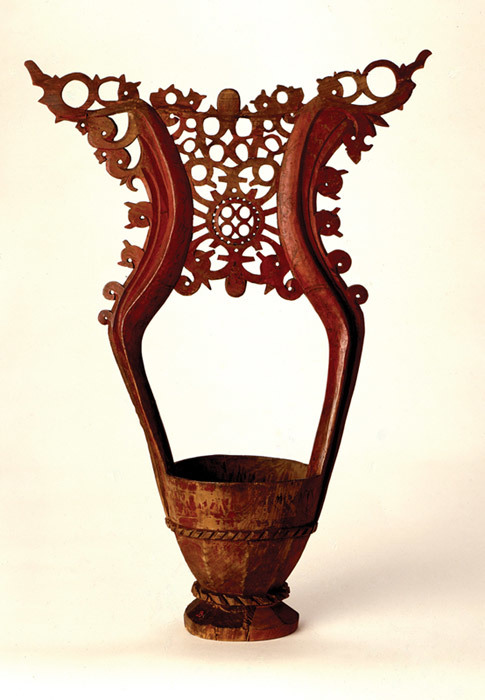
Kousa, kinkerikousa A traditional Finnish beer drinking vessel (see image on the right).
Kyöpelinvuori "Mountain of Ghosts". According to a folk song, old maids are sent to "Raatikko, behind the Kyöpeli Mountain" so boys cannot marry them. "Raatikko" refers to a place where useless things are thrown away to. Kyöpeli, kööpeli, pöökeli, or pöökeri are theorized to come from either Swedish spökelse "ghost", or German Kobold "household spirit". In either case, it came to refer to a ghost or a demon. Due to Swedish and German influence from the witch hunts of Western Europe, Kyöpelinvuori came to be seen as the place where witches gather on the Devil's Sabbath. For Swedes, Blåkulla was the place for witches, while Glasberget "Glass Mountain" is the place where virgin women go after death: the glass surface makes it impossible for non-virgins to climb up the mountain. However, for Finns, these two fused into one and the same thing, the Kyöpelinvuori. Virgin old maids and witches of Finland can then party it up on the same mountain. A woman of the age of 25 and still unmarried (and obviously a virgin too) is "on the threshold of Kyöpeli", and the climb up has still been very tasking. The definitions seem to be, unmarried and no children = virgin, unmarried but has a child = not good enough even for Kyöpelinvuori. At this rate, if you are an unmarried childless woman at death... Well, I guess we will see each other there!
Lempi Power of attraction (sexually, to attract a mate but for humans), which was seen as supernatural.
Loihtu "Incantation, spell". Standardized Finnish uses the overcorrected form loitsu.

Lovi Literally "a notch". Going into a state of trance is called "falling into lovi" (langeta loveen). In 2025, Erika Vikman represented Finland in the Eurovision Song Contest with the song Ich komme "I come", which is about orgasming. The lyrics include multiple references to shamanism, including the term langeta loveen. In addition to trance, from the perspective of "Finglish", it sounds like "to fall in love". However, Erika herself supported a third meaning: "falling into a notch", aka "pussy" (her words, not mine). She's not so wrong; there is some evidence that suggests that people of the old made a connection between trance and orgasming. Similarly, the female genitalia is seen as a path to the Underworld, as new life is possible to be born from there.
It has been theorized that in the Proto-Uralic language, *kixi- would've meant both "(of birds) to court" and "to sing a shamanistic song", making another connection between sexual and spiritual excitement.
Luonnotar A female nature deity. The definition usually includes Etelätär, Kuutar, Osmotar, Otavatar and Päivätär, as well as Kavet who is sometimes called "the Luonnotar". There are also multiple references to luonnottaret that don't specify any names, including the Luonnotar Trio.
Luote A specific kind of powerful word of incantation, usually kept as secret as possible and not said out loud without a serious need. The most powerful luotteet are in possession of the inhabitants of the Underworld. A Kainuian runosinger pointed out that in order to make fire incantations powerful, one had to refer to fire with the specific word panu, for instance (not a standard Finnish word). However, usually luotteet refer to full lines of poetry. They are also pyhät sanat "holy words".
The word luote is often said to come from luottaa "to trust", because the words could only be known if someone entrusted them to you. Etymological Dictionary of Finnish also suggests an early verb luottaa "to read (sacrifical) incantations" or something similar, which would've then gotten connected with luottaa "to trust". A connection to Inari Sámi luotte "joik, incantation" and Ter Sámi lī̮´χte "sacrifice, Sámi pagan religion" has also been suggested, but these words could also come from Old Norse blóta "to sacrifice" (unlikely because the word doesn't exist in Western Sámi languages).
Lyyli As a verb: to worship, to give sacrifical offerings, to fawn, to cast magic, (to pray strictly in pagan context). As a noun: magic, spell, fawning, luck. Lyyli snake = the familiar (snake) of a tietäjä. Lyyli spring = a spring with treasure, the water appearing rusty. Lyyli tree = sacrificial tree. A lyylikki = an old tietäjä woman. Origin of the word is unknown, theories include a connection to löyly, Old Norse hluti "lot, fate", and Russian ljúĺkat́ "to lull a child to sleep by singing".
Löyly Sauna steam which is caused by throwing water on the sauna heater (kiuas). The origin of the word is in Proto-Uralic *lewle "spirit, soul".
Metsänpeitto "Forest cover". Cattle or even a human could get stuck in the "forest cover": they'd become lost, familiar forest turns foreign, and they are not able to find their way back home. Those who come look for them cannot see them, and the lost cannot interact with the ones looking for them even if they were in the same place; the lost one's voice cannot be heard, their touch cannot be felt, and they look like a stone or a tree to anyone present. Where are they then? On another "layer" of reality which belongs to the maahiset, mirroring the real world. If you get stuck, you should try doing things like wearing your clothes inside out or looking at the world upside down through your legs; it might just manage to "push" you back to your own side of reality.
Noita Originally, a shaman. Later, used of all kinds of "magic users".
Oksi The original, sacred word for the bear. Never used in order not to summon one. Therefore, runosongs usually speak of ohto, a diminutive of oksi. The standard Finnish otso is an overcorrection.
Parantaja "Healer".
Poppa, poppo A tietäjä or healer. From Russian поп pop "priest", just like the Finnish word pappi "priest".
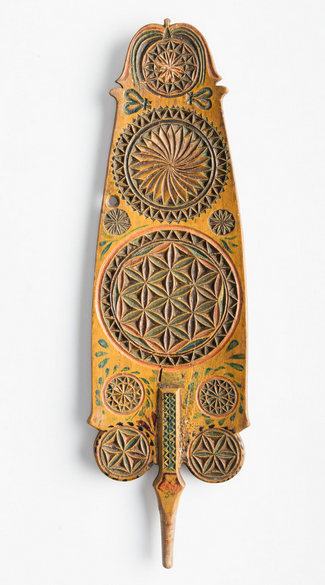
Rukinlapa "Distaff". Popular traditional folk art to use as decorations, even though they are not much in their original use anymore. In Finland, the decorations are often different kinds of flower symbols.
Runo, runosong From Proto-Norse ᚱᚢᚾᛟ runo "secret, mystery". Finnish oral tradition, folk poetry, is connectively called runot. Myths, epics, incantations, rituals, love songs, all such count within this umbrella term.
Runoi, runonlaulaja "Runosinger". Runoi is an old term, no longer used because it doesn't follow modern Finnish grammar rules. The modern Finnish equivalent to it would be runooja, but people often don't use that, instead going for runonlaulaja (literally "runosinger").
Sammas, sampu The world pillar, possibly also the origin of magic and all kinds of wealth (such as agriculture itself).
Sarajas, Saraja The lake of the Underworld, same as Aluenjärvi.
Sarajoki The river of the Underworld.
Synty "Origin". Knowing the origin of a thing is vital to be able to control it in incantations. For example, fire and the bear originate from the sky, water was pulled from a mountain by Väinämöinen, while diseases were given birth to by Louhi.
Tietäjä Literally "one who knows". The Finnish equivalent to a shaman: a shaman's soul leaves the body and travels to the Underworld, but a tietäjä's does not, being the reason why a tietäjä cannot exactly be considered a shaman. The institution likely still developed from shamanism, as runosongs describe tietäjät participating in similar Underworld journeys as shamans.
Tonttu Household haltija.
Trulli A witch, like the Western European Easter witch or other woman.

Turilas, tursas "A giant".
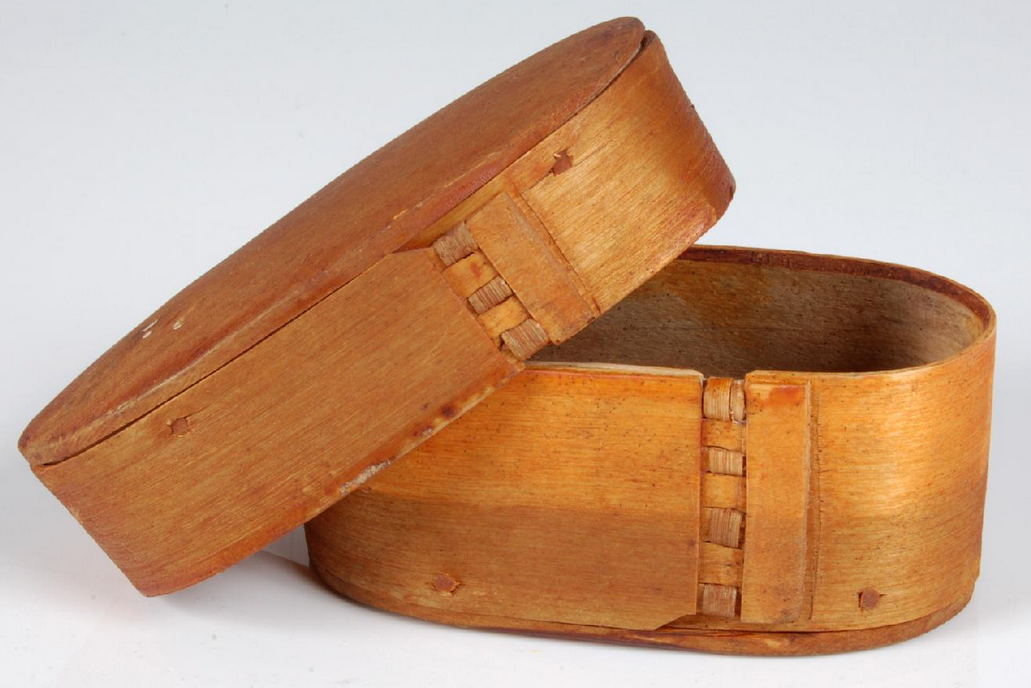
Vakka A wooden container. Appears in the context of Finnish tradition a lot; for example, after spring sowing during the Ukon vakat or Vakkajuhla festival, a vakka-full of food is offered to Ukko.
Väki "Power". Generally refers to the supernatural power in all kinds of elements, or haltijat collectively. It has been compared to mana and orenda, though some researchers emphasize it is not a general life force of the world, but impersonal powers in things. And in ordinary language, väki is synonymous with any kind of power or force. Anna-Leena Siikala and Matti Sarmela used väki to explain the difference between shamans and tietäjät: a shaman communicates with the souls of the dead, while a tietäjä handles impersonal väki.
Ämmä In modern Finnish, "a bitch". Originally, an honourable term for an old mother. Need to always clear this up because Finns who don't know about this topic much tend to be confused at goddesses being referred to with this term. It's respectful!