


| Names: | Of Pekko: Pellon Pehko  Pellon Pehku Pellon Pekka/Pekko Peltopekka   Peltopekko Of Osmo: Onni ,  and/or and/or  , , Osma Osmo  Of Osmotar: Kosmotar Osmotar |
|---|---|
| Grain: | Barley |
| Drink: | Beer, wort |
Pekko, Osmo and Osmotar are all figures related to barley. Pekko is usually described as the god of barley and drinks made of it, a personification of barley itself. Osmo is the mythic first sower of barley nad brewer of beer. Osmotar is the luonnotar who invented beer brewing in the center of the world.
Beer is a sacred drink, also used for falling into trance until brännvin became more popular for that.
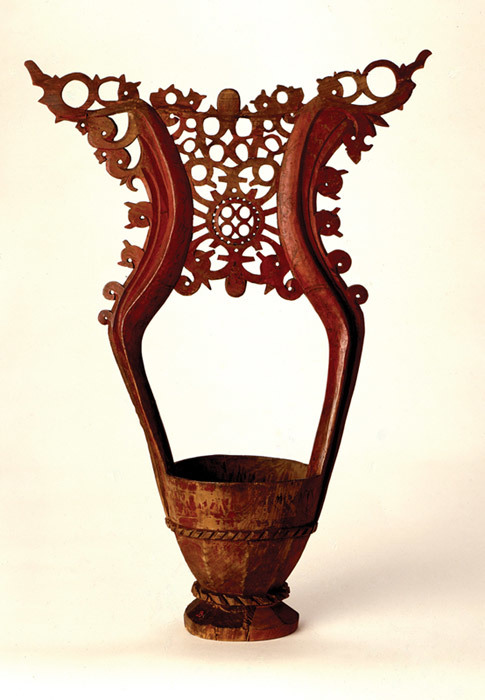
Pellon Pekko and variants, meaning "Pekko of the Field", is very unclear in runosong mentions, but there are multiple other mentions of him in history as the god of barley who granted its growth. He gave wort, pellon maito ("milk of the field"), and to drink it was tasting Pekko himself. As beer is made of barley, the words related to Pellon Pekko have also been used to mean alcohol. In runosongs, Pellon Pekko usually means an awn. The milk of a black sheep could be poured on a field where braley is becoming dry, as a sacrifice to Pekko.
Uno Harva compared Pekko to Bacchus because in runosongs, beer makes people sing and could therefore be related to arts and inspiration.
Osmo appears as a mythic original sower of barley. His connection to barley is truly important: he is mentioned as the "owner" of barley instead of Pekko (would be explained by Pekko being the barley itself, I guess). Runosongs feature the phrase Osmon pelto ("Osmo's field"), which in my opinion is also the origin of the more vague pyhä pelto ("sacred field") which appears in many more regions, including in Western Finland. (A runosong from Kuusamo also says Marian pelto "(Virgin) Mary's field"). Some instances could also call him the first beer brewer; much more widespread is, however, the description of the feminine Osmotar inventing beer.
Osmo is connected to high culture inventions, such as advanced agriculture and, among Estonians, cast iron. Osman solmu ("Osma's knot", Turk's head knot) has been used to help find lost objects. Some runosongs imply that Osmo would be the same as Kaleva. Osmo is later mixed with the Christian God as the giver of food and blessings. (I mean he always gave those but in some runosongs, Yahweh is added to accompany him).
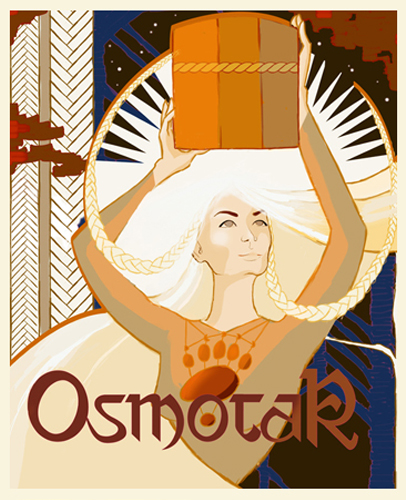
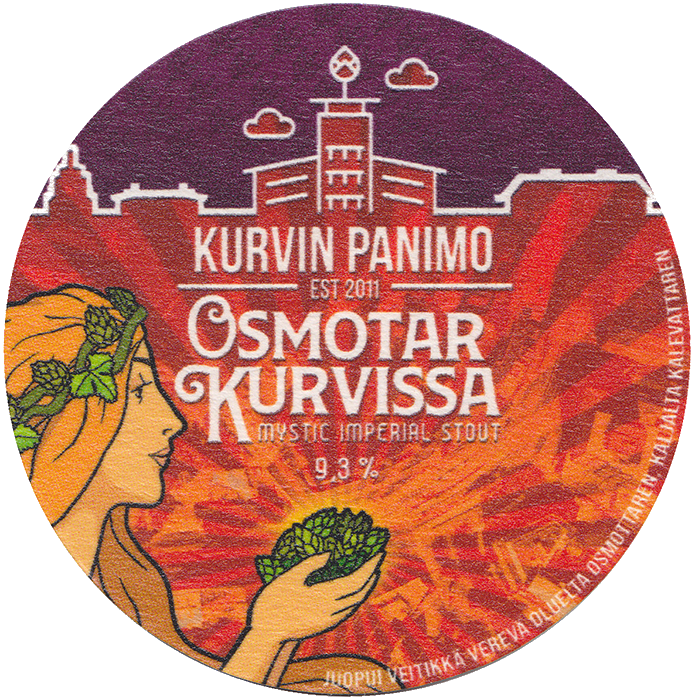
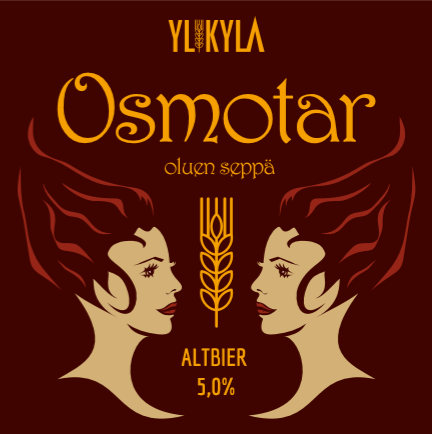
Osmotar is described as a luonnotar (nature goddess), and she seems to live on the island at the center of the world like many other luonnottaret. She is the "smith of ale" described in the runosong about the origin of beer. She tried to make beer but can't get it to ferment. With shamanistic abilities, the summons animals to help her, and a marten brings her the drool of fighting animals which succeeds in fermenting the drink. This is historically accurate: before yeast was available, the drool of a boar was used in beer making.
| Pekko and variants | Theorized to come from Proto-Norse *beggwu "barley", but this is by no means certain. |
|---|---|
| Onni, Osmo | Onni means "luck" and has thus been seen as a personification of luck, but this view isn't necessarily correct. Osmo is a mystery, meaning "wolverine", "bear", "bridegroom", "cast iron", "Kaleva", etc. depending on the context. |
| -tar, -tär | Feminine suffix. |
Only in Finnish, sorry. This is the source material.