Here, I'll try to explain a little bit about traditional Finnish clothing and jewellery. THIS IS NOT A COMPREHENSIVE LIST OF ANYTHING. This is a massive topic, so I can only explain so much.
Muinaispuku "Ancient dress". Clothing of the Iron Age (Viking Age, Northern Crusades) reconstructed based on excavated graves. Detailed explanation and illustrations can be found here: Jenny Kangasvuo: Suomalainen muinaispuku - myöhäisrautakautinen vai nykyaikainen juhlapuku? (1997).
Kansallispuku "National dress". 18th and early 19th century peasants' festive clothing, checked for historical accuracy and confirmed by Kansallispukuraati (National Dress Council). There are over 400 confirmed national dresses in Finland, usually named after the region or village it is from. Here, you can find pictures of most kansallispuvut (but not all).
Kansanpuku "Folk dress". Less official clothing which mimics of styles but hasn't been officially checked and confirmed.
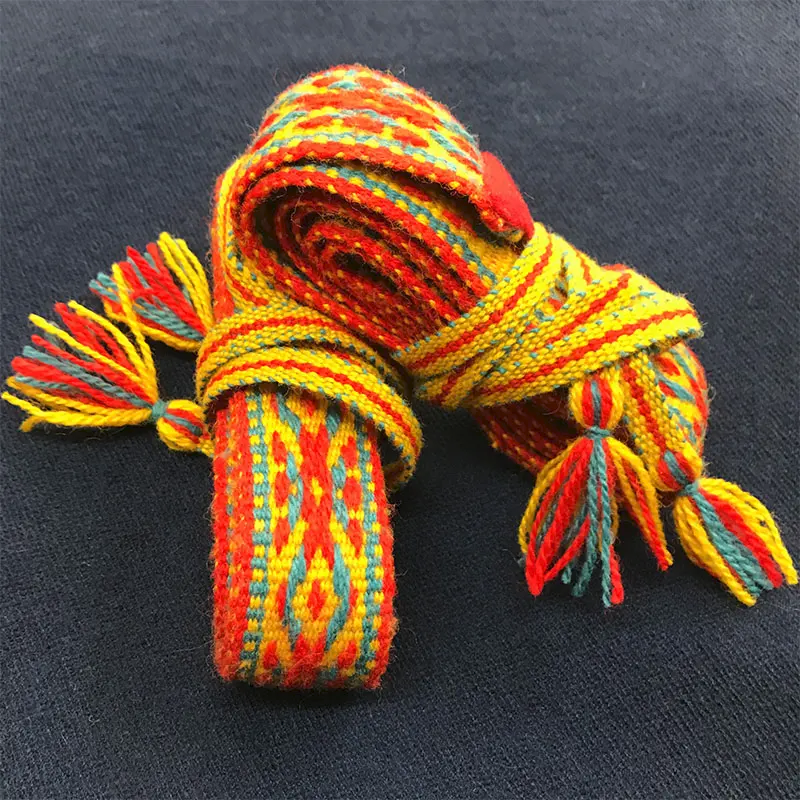
Paulanauha, paulat Woven laces used to tie the shaft of a boot. These are very common and mostly known from Sámi, but there is at least one Finnish kansallispuku which also uses them: Koillismaa suit for men. (Koillismaa is the northern parts of Kainuu on the map on the front page).
Pirtanauha Laces woven with a reed. Like paulat, but not specifically for shoes. Definitely the more common type in Finland, and it took over the older lautanauha technique during the Middle Ages.
Lautanauha Laces woven with tablet weaving. Used, for example, especially, as belts.
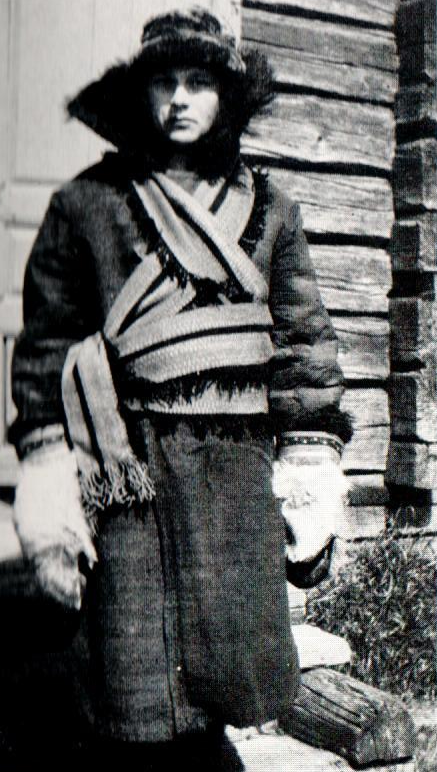
Vyö Belts! Belts were very important, showing a lot of things about the wearer. Some belts were very big and elaborate, with all kinds of extra stuff attached. Especially tietäjät had impressive belts which had metallic parts.
Pieksut "Shoes". Nowadays the word tends to only refer to shoes with pointed tips. Those with long shafts are called lapikkaat and those with no shafts, supikkaat. One tip is the traditional type, two tips (making the tip more square than triangular) is a newer Western Finnish innovation to attach the shoes to skis better.
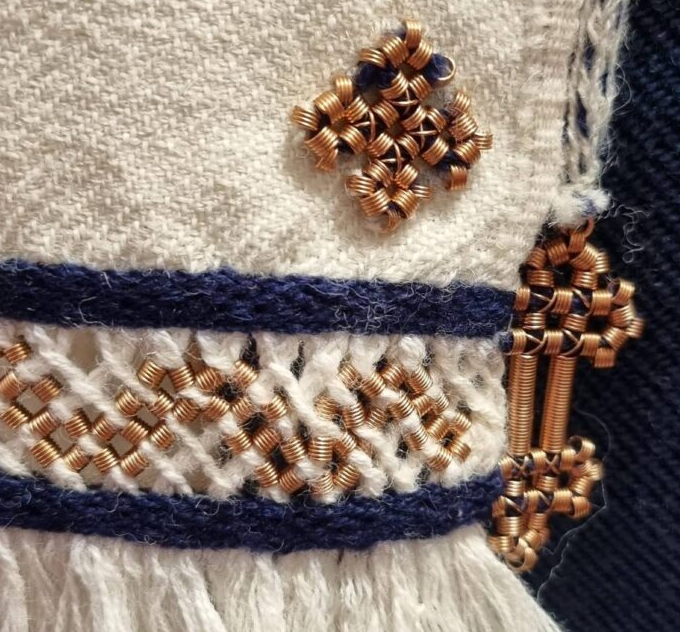
Pronssispiraali Iron Age and Viking Age bronze jewellery made by turning bronze thread into a spiral.