

Allllll right. Let's start with an explanation.
Tursas and Turilas are words which mean "a giant". It was loaned from Proto-Germanic *þurisaz "a giant". Agricola used the term Turisas to refer to a war god. The commonly seen form Turso is Karelian only. Christfrid Ganander considered "war god Turri-Turras" and "sea giant Meri-Tursas" to be separate entities. There is no consensus among researchers if there are 1, 2, 3, or more beings called Tursas/Turilas.
The terms Iku-Turilas ("eternal giant") and Väki-Turilas ("power giant") refer to the father of Väinämöinen, Kaleva. According to a Forest Finnish runosong, it was actually him who released the Sun and the Moon (unlike, for example, in Kainuian runosongs where this is done by Väinämöinen. But I explain more on this later). He also seems to have a connection to water: Ganander wrote down runosongs where this iku-Turilas is equated to the "black man from the sea", the giant who cuts down the Great Oak. Ganander also called this figure "King of Water". Mikko Heikkilä suggested that the name Kaleva would have the same origin as the Norse word hlér "sea". While those are speculations, it is no doubt that Kaleva is a primordial, sea-related giant.
Another term mentioned in runosongs is Meri-Tursas partalainen or mies turilas paiturainen, "Meri-Tursas" meaning "sea giant". The last word of the description might be a reference to someone who lives at the outer edge of something. He is only mentioned as the one who impregnated Louhi with waves when she was cooling herself off in water, and this resulted in the birth of the Nine diseases. Since Kaleva was connected to sea, yes, of course there is a possibility that this is the same figure. However, it's not certain, and researchers have argued about this quite a lot. Interestingly, there was probably at least one other person who saw this Meri-Tursas as very Kaleva like: in a rare runosong, it is said that Väinämöinen was born when Meren Ukko Parkka Äijä ("lord of the sea" ...something) impregnated a Maiden of the North with waves (this time it was because she sook him out as she was horny). This would, of course, imply that Louhi is Väinämöinen's mother... quite the opposite from the "Son of the Sun" that he is called. All I can say is, the versions where Meri-Tursas causes the birth of the Nine diseases is 1) the older version to be written down, 2) the more common version in different villages.
These are verrrrry interesting thoughts but I'd watch out before coming to hasty conclusions. Ganander saw Meri-Tursas and the "war god" Turri-Turras as two separate figures. Some researchers have agreed, these verious "turilaat" are separate. Others have argued otherwise: maybe they're the one and the same. All I can say is, I don't think it is possible for Kaleva to be the same as our next giant:
A third such giant mentioned is tulinen Tursas "fiery giant" from Pohjola. Once, three or four luonnottaret reap a meadow but a fiery giant steals the hays, burns them and sows them at the gates of Pohjola. From there, a giant oak grows (also said to grow in the center of Kipumäki = the spot of the world tree). However, it grows so large that it blocks the Sun and the Moon, and the goddesses try to find someone who would be able to cut it down. This is when the "black man from the sea", who indeed might be Kaleva, shows up and cuts it down (and in this way, releases the Sun and the Moon).
The popularly known "Iku-Turso" of the Kalevala is like a combination of all these three: using the name of Kaleva (Iku-), the sea giant-ness of Meri-Tursas, and the origin in Pohjola of tulinen Tursas.
A name like "Turri-Turras" does not appear in runosongs. In the 18th century, many scholars suspected that there has once been a Finnish leader with a similar name who had become so respected that he was deified after death. This figure was also connected to Torro who once ruled Finland according to Icelandic scholar Arngrimus Jonae (16th and 17th centuries). In Southwestern Finland, there is a sacred spring called Torren lähde "spring of Torre". Uno Harva connected these to the "King of the Finns" Þorri, also a personification of winter, from Icelandic sagas. However, other researchers have pointed out that these "Finns" of Norse sagas could very well be referring to Sámi people, who Norwegians indeed called "Finns". That, and also the fact that these personifications of natural forces were likely not actual historical people.
Jaakko Saarikivi suggested that the name "Turras" could have it's origin in, or been influenced by, the Germanic *þunraz "thunder", and therefore also "Thor".
Interestingly, these names could still have appearances in runosongs. The Finnish runosong line, likely of Germanic loan, Tiera Nieranpoika matches the Icelandic information of King "Þorri, son of Snær" (Snær also meaning snow). In runosongs, this Tiera, son of Niera is said to have created and even given birth to the first horse.
| Names: | Of Iku-Turilas:
Iku-Turilas  , unknown , unknown
Väki-Turilas (no region known) Of Meri-Tursas: Meri-Tursas partalainen (no region known) Mies turilas, tursas paiturainen 
Of tulinen Tursas: Mies Turilas
Tulinen Tursas
Tursas Pohjolasta
|
|---|
Otherwise, a South Savonian runosong calls the bear jouhitursas "hair giant", and a Kainuian runosong against enemy shamans states the incantation caster will "plough a field of vipers with a hundred-horned ox and a thousand-headed tursas".
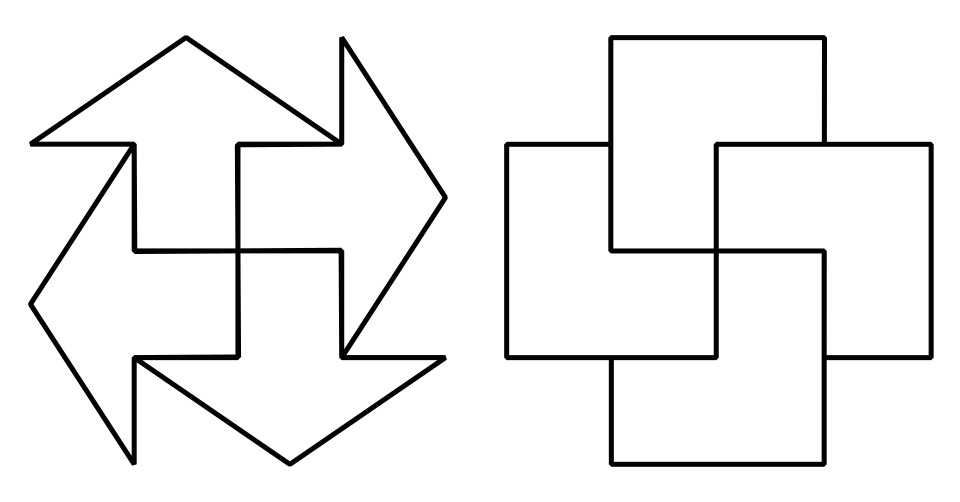
Tursaansydän "Heart of Tursas" is a symbol for good luck and protection which was, for example, carved on objects and buildings. As to why exactly it's called that is not known. It and the word tursas have become associated with different aquatic animals such as turska "cod" and mursu "walrus". Tursas and mursu have also meant a maahinen in North Karelia, Finland; a haltija by the campfire in Central Finland; but most of the time, the same as meritursas, some kind of a sea monster. As least in some parts of Western Finland, the symbol was called nelikirvehinen "four-axed". It seems that prior to the 18th century, swastika symbols in Finland were these more complicated tursaansydän instead of a simple swastika.
| Tursas, variants | From Proto-Germanic *þurisaz "a giant". |
|---|
❅ Birth of Kaleva
❅ Nine diseases
❅ The Release of the Celestial Lights
Only in Finnish, sorry. This is the source material.