


The annual cycle is called ajastaika.
When it comes to traditional and pagan festivals, it really depends on the region! I am then sorry if I fail to mention something that is central for some other region I'm not familiar with. Based on traditions in Kainuu specifically, I made such a calender, but it's for the most part also applicable for many other regions (maybe dates may be off a little bit, this one might be missing something that is practised in another region, and cheese days tend to be in many different places):
| ❄️️ Talviyöt | October 13 | Beginning of the winter half of the year. The symbol on the runic calendar was a leafless tree (but unfortunately that emoji is too new to work here). |
|---|---|---|
Symbols on runic calendars:   |
||
| Kekri | First Saturday of November | The biggest festival of the year, which also marks the new year. A great feast (with beer of course), traditionally including the slaughter and eating of a sheep. Fires are burnt, and food is sacrificed at the birch chosen on Ukonjuhla. |
| Runosong: The Great Ox | ||
Symbols on runic calendars:  
|
||
| Joulu, pesäpäivät | December 24, 25, 26, or winter solstice | The Sun is in its "nest", so it is the darkest time of the year. Birdfeeding. If there is a celebratory meal, it pales in comparison to Kekri's. |
| Runosong: In my subjective opinion, The Great Pig | ||
Symbols on runic calendars:  
|
||
| Talvennapa | Around the middle of January (depends on the region) | Middle of winter, the coldest time of the year. |
Symbols on runic calendars: 
|
||
| Laskiainen | 7 weeks before Easter (modern), usually in February | Celebration for textile handicrafts. Sliding down a slope (with, for example, a toboggan). Asking for big vegetables from Äkräs. There must be an old idea of the dead coming for a visit because 1) pea soup is eaten and peas are connected to the dead, 2) one is supposed to be quiet in the sauna so bugs won't be too much of a bother next summer, and bathe and eat without lighting a fire; quiet and darkness are demanded by the visiting dead ancestors. |
| Food: Pea soup, laskiaispulla | ||
| Deities: Äkräs | ||
| Punamarjanpäivä | March 25, spring equinox? | The spring and autumn equinoxes are not holidays by themselves in Finnish tradition, but punamarjanpäivä ("Day of Red Berries") in late March comes close. The date and name have obviously been influenced by Virgin Mary, for Christians think Jesus was conceived on this day. Incidentally, the name Mary/Maaria is very close to the Finnish word marja "berry". The Sámi equivalent Márjjábeaivi has traditionally been very important for Sámi, more so than Easter. The Estonians also have their equivalent, marjapunapäev, which they consider the day of women. Estonians and Votians drink red drinks, while Ingrians eat cranberries. In Finland too, it is the beginning of spring, and it was common to go watch the sunrise together. Because Päivätär was largely replaced by Virgin Mary in Finland, some neopagan groups have decided to dedicate this day to Päivätär. |
| Runosong: In my subjective opinion, The Death of Lemminkäinen | ||
Symbols on runic calendars: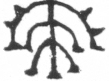 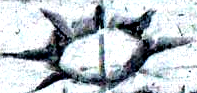  
|
||
| 🌳️ Suviyöt | April 13 | Beginning of the summer half of the year. The symbol on the runic calendar was a leaf tree. |
Symbols on runic calendars:  
|
||
| Huutoyöt | April 23 | Yelling a lot to scare away wolves. |
Symbols on runic calendars: 
|
||
| Kevätristi | May 3 | The last days to set cattle outdoors. Family gathers at a sacred tree in festive clothing to eat and drink beer. Also a day for fishers and, at least in Eastern Finland, the beginning of sowing. |
| Runosong: The Theft of Sammas | ||
Symbols on runic calendars:  
|
||
| Vakat (Forest Finnish: Ukon keikkeet) |
May 25 | A celebration after spring sowing, for the whole village. A container (vakka) full of food is sacrificed. Sometimes specifically held in sacred groves. Can include ritual dancing, kneeling in a circle. Splashing water and reading incantations for rain. Some Christian claims about ritual sexual intercourse, but no historical evidence of such. |
| Food: A lot. Also beer; as many as possible need to be drunk to ensure good harvest: Ukon malja "Ukko's goblet". | ||
| Deities: Ukko so he'd give good weather, the ritual awakening of Sämpsä | ||
| Runosong: The Awakening of Sämpsä | ||
Symbols on runic calendars:
|
||
| Ukonjuhla | Summer solstice, Friday and Saturday on the week of summer solstice (modern) |
Burning a bonfire, dedicating and decorating a birch to be a sacred tree. Decorations out of bird cherry flowers and branches. Thunder before this day is bad, after it good. Because festivals didn't tend to have specific dates, it's possible that Ukonjuhla and Vakat have kind of been seen as one and the same, depending on which week you decided to hold it. |
| Food: Ukon malja "Ukko's goblet" of beer. | ||
| Deities: Ukko | ||
Symbols on runic calendars:  
|
||
| Hiidentanssit | First Sunday in July | In Sotkamo, Kainuu, the first Sunday in July is a time to go to Hiidenportti in Sotkamo and conduct some worship rituals (which have shifted into just dance parties in the modern day) for the forest god Hiisi. |
| Deities: Hiisi | ||
| Keskikesä | July 13 | The warmest time of the year. In Estonia, this day is known as the birthday of the bear. |
| Runosong: For some neopagan groups, the Origin of the Bear | ||
Symbols on runic calendars: 
|
||
| Juustopyhä | August 24 | Cheese holiday! When there is a "cheese holiday" depends on the region. There were general festivities, the name comes from the fact that cheese was gifted to (Christian) priests on this day. Also I love cheese so I'm keeping that name. Anyways, it's the first day of autumn. |
Symbols on runic calendars:  
|
||
| Pässinpäivä | September 29 | Day to take cattle indoors, including protective incantations and sacrifices to homestead haltijat. A ram was sacrificed, but modern people opt for burning a goat made of straw during Kekri instead. This is around the beginning of the moose hunting season, so a moose hunter could drink a Hiiden malja for the god of moose, Hiisi, and pour a bit of the alcoholic drink onto the ground as a sacrifice. |
Symbols on runic calendars:  
|
Note: Festivals that are on different days depending on the year, such as laskiainen and hela (explained below) do not have runic symbols. The symbols above are from runic calendars that have been found from Merikarvia  , Paimio
  and Jokioinen
  , plus Finland's oldest discovered runic calendar which is in a museum in Paris. The symbols I got or scanned myself from:
When it comes to incantations, Thursday and Sunday are the best weekdays for them, though in the case of the latter this could be because it's a sacred day in Christianity, the idea bleeding into folk tradition. In Kainuu, people thought one should not work on Mondays (in addition to Sundays) because harmful forces were on the move.
The weekdays in Finnish are named after North Germanic custom: Maanantai ("Moon's day", Old Norse mánadagr), tiistai ("Tyr's day", Old Norse: týsdagr), keskiviikko ("Middleweek"), torstai ("Thor's day", Old Norse þórsdagr), perjantai ("Frigg's day", Old Norse frjádagr), lauantai ("washing day", Old Norse laugardagr) and sunnuntai ("Sun's day", Old Norse sunnudagr). Though tai is no Finnish for "day", it only exists in these weekday names.
Months, on the other hand, have native names: Tammikuu ("core (of the winter) moon", January), helmikuu ("pearl moon", February), maaliskuu (either "earthly moon" or "tree sap moon", March), huhtikuu ("swidden moon", April), toukokuu ("sowing moon", May), kesäkuu (either "summer moon" or "fallow moon", June), heinäkuu ("hay moon", July), elokuu ("harvest moon", August), syyskuu ("autumn moon", September), lokakuu ("mud moon", October), marraskuu ("death moon", November) and, in modern Finnish, joulukuu ("Yule moon", December). However, the older name for the last one is talvikuu ("winter moon"). When the gap year system had not been implemented, sometimes, an "extra month" called vaahtokuu ("foam moon") was added between March and April.
There are also various other old names for months. January has also been known as sydänkuu ("heart (of the winter) moon"), both March and April have been known as vaahtokuu ("foam moon") and hankikuu ("snow blanket moon"), May has been known as sulamakuu ("thawing mooon"), mahlakuu ("tree sap moon") and kylvökuu ("sowing moon"), June or July has been known as tuohikuu ("birchbark moon"), August has been known as mätäkuu ("rotten moon"), October has been known as likakuu ("dirt moon"), and November has been known as routakuu ("ground frost moon").
I'd give credit to Hoyoverse for naming the Finnish moon worshippers "Frost Moon Scions" in their video game Genshin Impact if I wasn't certain that them picking a name with an actual connection to something in Finnish culture was 100% coincidental.
I don't have many mentions to this, as it's not practised in my region. However, in Valkeakoski, Pirkanmaa, there is a traditional festival held called Hela or Helkajuhla in spring around Pentecost. There, special runosongs called helkavirret are sung. Bonfires called helavalkeat or toukovalkeat are burned there, as well as in Häme, Satakunta and Uusimaa, in order to drive away evil spirits. Cattle were also made to walk through fires in order to prevent disease. There was mead and dancing. Though the idea behind the festivities is pre-Christian, the runosongs sung in Pirkanmaa are thoroughly filled with Christian themes. There, maidens formed two lines, singing the runosongs and walking through a ritual route to Helkavuori "Helka hill". There, they formed a circle, which has been thought to symbolize the Sun.
I'm sure this tradition is very precious to Western Finns, but considering I'm not one, it's never been in my personal life.
A term used by Forest Finns to refer to the ritual they held before Ukon keikkeet. If early summer was dry, the Lady of the house made a basket out of birchbark, and peat from the southern side of the well was but in. Then, the Lord of the house put three seeds of each crop into the peat, as well as silver, and he put the the basket on the lykkylauta, the altar shelf for Ukko above the house's door, while wearing white clothes. Then, silver was also taken to the corner of the dry field, and a drop of beer was offered. The basket was then wet twice every day until rain came, after which Ukon keikkeet was celebrated, and the basket was taken to the same corner of the field until harvest. After harvest, the basket was offered to maahiset.
The New Moon is very prosperous, healthy and lucky time. It is custom to go outdoors to "greet" the New Moon, to go watch it. You can ask the New Moon for health and wealth for example in the following way:
In your left hand, have salt or bread. In your right hand, have coins or a copper object. Chant:
   Terve, terve, uusi kuu Sinä täydeksi, minä terveeksi Vanha kuu sairaaksi Uusi kuu terveeksi Uusi kuu, terve kuu Vanha kuu, sairas kuu Uusi kuu, onnikuu Rahakuu, rauhakuu Tällä kuulla tavaraa Sä uusi kuu nyt anna Suolaa, leipää pivossa Ja kuparirahaa tiuhuaan Anna sä uusi kuuni | Hail, hail, new moon May you be full, may I be healthy May the old moon be sick May the new moon be healthy New moon, healthy moon Old moon, sick moon New moon, luck moon Money moon, peace moon On this moon, items Give to me, new moon Salt and bread in my palm And copper money so frequently Give to me, my new moon |
And this is just one example, probably the most common chant is just uusi kuu sairaaks, minä terveeks ("may the new moon be sick and I be healthy") or something equally short. But I wanted to include the much nicer words here! :) I probably should also mention that the greeting terve (translated as "hail" here) literally also means healthy (which is also the origin of the English word "hail").
There is no one set way that weddings and such were "traditionally" celebrated. Traditions have varied from region to region, between time periods, and between the wealth of the families. Some basic things have usually stayed the same, however: because people lived in agrarian societies, in peasants' wedding, the bride moved into the house of the groom, eventually to become the Lady of the house. Weddings lasted for three or four days, and two separate feasts were held first at the bride's childhood home, and then at the groom's home. The bride was expected to cry before and during her wedding, so she wouldn't have to cry from homesickness or such later in life.
Betrothal preceeding marriage can also be assumed to be an ancient custom, as the Christian church never demanded it, but it is a tradition that still holds strong. People thought that sexual relations after getting engaged only were alright, which the church had a big problem with (you had to be married for real in their opinion). It is impossible to say, really, which attitudes came from Christian morality and which preceeded it. Children born out of wedlock, and their mothers, were insulted and ridiculed, for instance (the act of giving birth out of wedlock called "like committing a murder"), and the age of this attitude is impossible to calculate. From strong tradition we can, however, see that much like many other European pagans, Finns too were fine with the idea of killing a newborn child if it had not yet been named and thus made a member of the community. This is always something to consider, I think, when people debate things like abortion rights. Runosongs also show us that apart from the maiden herself, it was the mother and brothers who had authority over who she could marry, not the father.
It is impossible for me to present some simple, clear way "traditional" marriages used to go, so I can only present some traditions that have been recorded from some regions. It is likely that the couple wore their finest clothes for the occasion, not specific wedding dresses. At some point, the fashion became so that the wedding dresses were mostly black. During the Middle Ages, the custom of the bride wearing a bridal crown also came to Finland. A married woman wore a headress or scarf that an unmarried woman didn't, though the styles have varied over centuries.
In the tradition of tuppikosinta ("sheath proposal"), which is mainly a Kainuian tradition though there is some info from elsewhere as well, a woman wears a belt with an empty sheath on it. If a man is interested in her, he can try to fit his knife into the sheath. If it doesn't fit, too bad. But if it does, the woman takes the knife with her and later, the man arrives at the woman's home (accompanied by a kind of "best man"). If the knife is at the back wall, the proposal is accepted, but if it's at the door, the proposal is rejected.
Likka lauloi suru suulla: "Ei on minulta miestä Tuppi on kyllä tuima vyöllä Van ei oll' veistä" Jo on tyttö tupelle tullut Vaimo varrelle vejäinnyt Kelle kulle kelvannoo Pistä veitsi tuppeen! | A girl sang with a sad mouth: "I have no man Though I have a proper sheath on my belt There is no knife" So has a girl come for a sheath A woman pulled herself for a haft To whom she suffices Put a knife into the sheath! |
Though in most cases, the guy would just go to a girl's house (with the "best man") with food and coffee and offer it to everyone in the house, and propose with words. If accepted, they could start planning proped betrothal. If not, he had to go home empty handed (they ate all the food).
In some sources I read, it said that weddings were hend in autumn. However, a source about Kainuu specified that the planning of weddings started in autumn, but wedding themselves were mainly held in spring, near Easter. Though it was possible to get married at around 16 years old, many if not most got married nearing their 30s or during. In an attitude that we can nowadays disapprove of, it was very shameful to end up as an "old maid". People were not comfortable with marrying relatives like cousins or counsins-once-removed. There were also social limits in marrying someone below your own societal class (like a future house-owning peasant's son marrying a maid).
Regardless of these expectations, there have always been people that don't fit into them. There were people who didn't care for any church approval for their relations, such as those deemed "pagans" (people who didn't go through church confirmation). (Based on runosongs, Väinämöinen seems to belong into this group.) These kinds of unmarried couples who lived as if they were married, were often called susipari "wolf couple". This term has only fallen out of use sometime around the 1990s, and unmarried cohabitation is very common nowadays. In Kainuu, an unmarried wife was called jalkavaimo "concubine" or leipäsusi "bread wolf".
In Kainuu, a large bread was sacrificed to Äkräs at the beginning of sowing.
