


| Names: | Vellamo      Vellimys |
|---|---|
| Spouse: | Ahti |
| Children: | Vellamo's maiden |
| Domain: | Water |
Vellamo is Veden emä, "Mother of Water", the water goddess. Other epithets for her include Veen emäntä "Lady of Water", and Meren emäntä "Lady of the Sea".
In Finno-Ugric mythologies, seeing the water deity, as well as many other deities on our "layer" of the world, as women is the original concept. Male form deities such as Ahti and Tapio are then later innovations.
Vellamo is especially respected by fishermen, as she can grant them her "grain" (fish). While seining, if you are lucky to see her, even far away, you'll get a lot of fish. Indeed, her most notable runosong appearances in incantations are related to fishnets and seining. Another runosong she frequently appears in is Väinämöinen playing the Kantele: his playing is so wonderful even Vellamo comes to surface to listen to it.
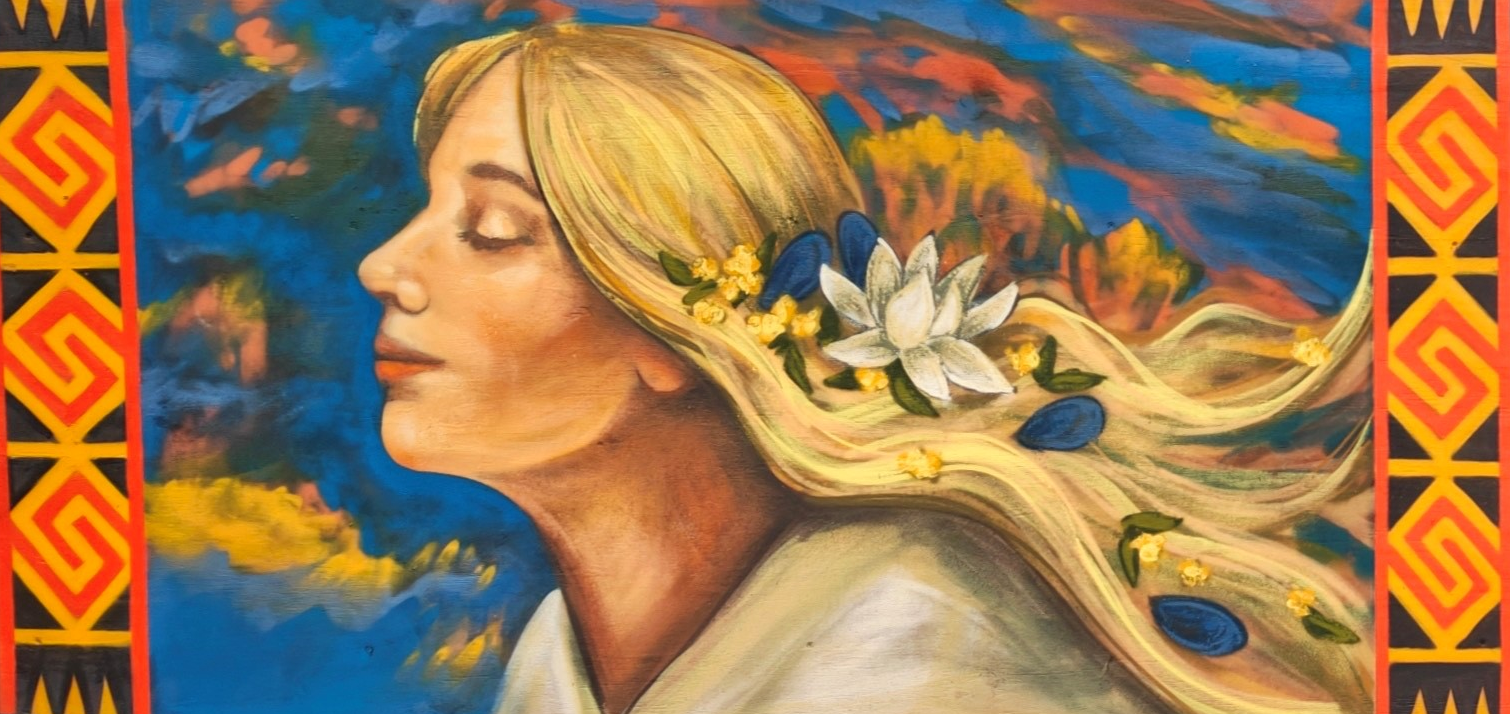
Like any Lady of her house, Vellamo possesses cows. The cows that are usually named are called Kirjo, Karjo and Haluna. She helps poor people by giving them cattle, but it is also possible to capture one of Vellamo's cows if it's eating on land by going around it while holding an iron object. In these contexts, the Lady of Water appears sitting on a rock, combing her hair.
Despite the often seen depictions of a blonde Vellamo, some folklore actually describes this cow-owning water spirit as having black hair and large, brown eyes. There is one Savonian runosong that speaks of blue eyes as well. She is also described as having a "breast of reed", which I assume means she has a shirt made of reeds.
Ptrui Kirjoa! Ptrui Karjoa! Ptrui haikutta Halunoo! Jop' on Kirjo kiinni pantu Karjo kaarehen sijottu Lemmikki lepän tyveen Haluna vesihakohon |
Ptrui Kirjo! Ptrui Karjo! Ptrui pale Haluna! Kirjo has been attached Karjo tied to an arch Lemmikki to the root of an alder Haluna to a watery branch |
| Names: | Ahti  Ahto |
|---|---|
| Spouse: | Vellamo |
| Children: | Vellamo's maiden |
| Domain: | Water |
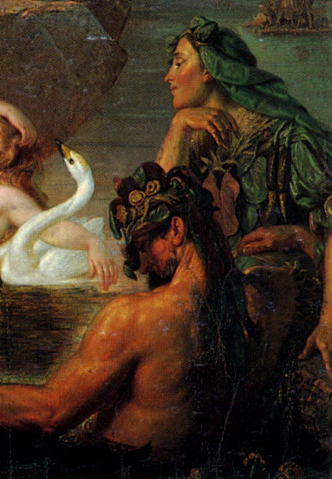
Ahti is known as the male water deity, in opposition to the original, feminine Vellamo. Despite this, his presense in tradition actually goes back far, so he's not to be dismissed. Typically Ahti and Vellamo are mentioned side by side, male and female, husband and wife. However, there are some opinions that portray "Vellamo's maiden" as Vellamo herself, so she'd actually be Ahti's daughter. Personally, I do not subscribe to this. "Vellamo's maiden" is a female water spirit who Väinämöinen or Ilmarinen fishes as a fish, but when cutting the fish, it jumps back into the water and reveals herself to be a water maiden.
In runosong incantations, Ahti is typically asked to give fish, especially perches: Anna Ahti ahvenia = "Ahti, give (me) perches". Similar to some other deities, he's also asked to give tietäjät the power of water. And just like Vellamo, he is also mentioned in context of seining.
Not quite connected to Finland, but among the Finnish diaspora in Ingria, Ahti was also strongly connected to seals.
Understanding Ahti in runosongs can be difficult, because the name actually appears for multiple entities. The other Ahti resembles more a human hero, and might not then be the same as the deity Ahti. He was a very wealthy man, almost like a king of his home island or area. He gets someone to wake up the vegetation haltija Sämpsä Pellervoinen to make his fields more fertile. Once, he went on a war campaign or raid, but snow, ice and wintery weather stopped him in the waters. The rest of this runosong is lost, and we don't know what happened then or what was even the point. Could this event have turned the once wealthy mortal Ahti into a water deity? Well, even if so, we have no evidence for it.
| Vellamo | Theorized to come from velloa "to churn", like vellova vesi "churning water". |
|---|---|
| Ahti | Early theories connected the name to the North Germanic word ahva "water". A later theory suggests a connection to ahtaa "to hang fishnets to dry". When it comes to the mortal Ahti, the name has been theorized to have the same origin as the Norse name Óttarr (Ohthere). |
Only in Finnish, sorry. This is the source material.