

Here, I will explain some actual ancient Finnish symbols.
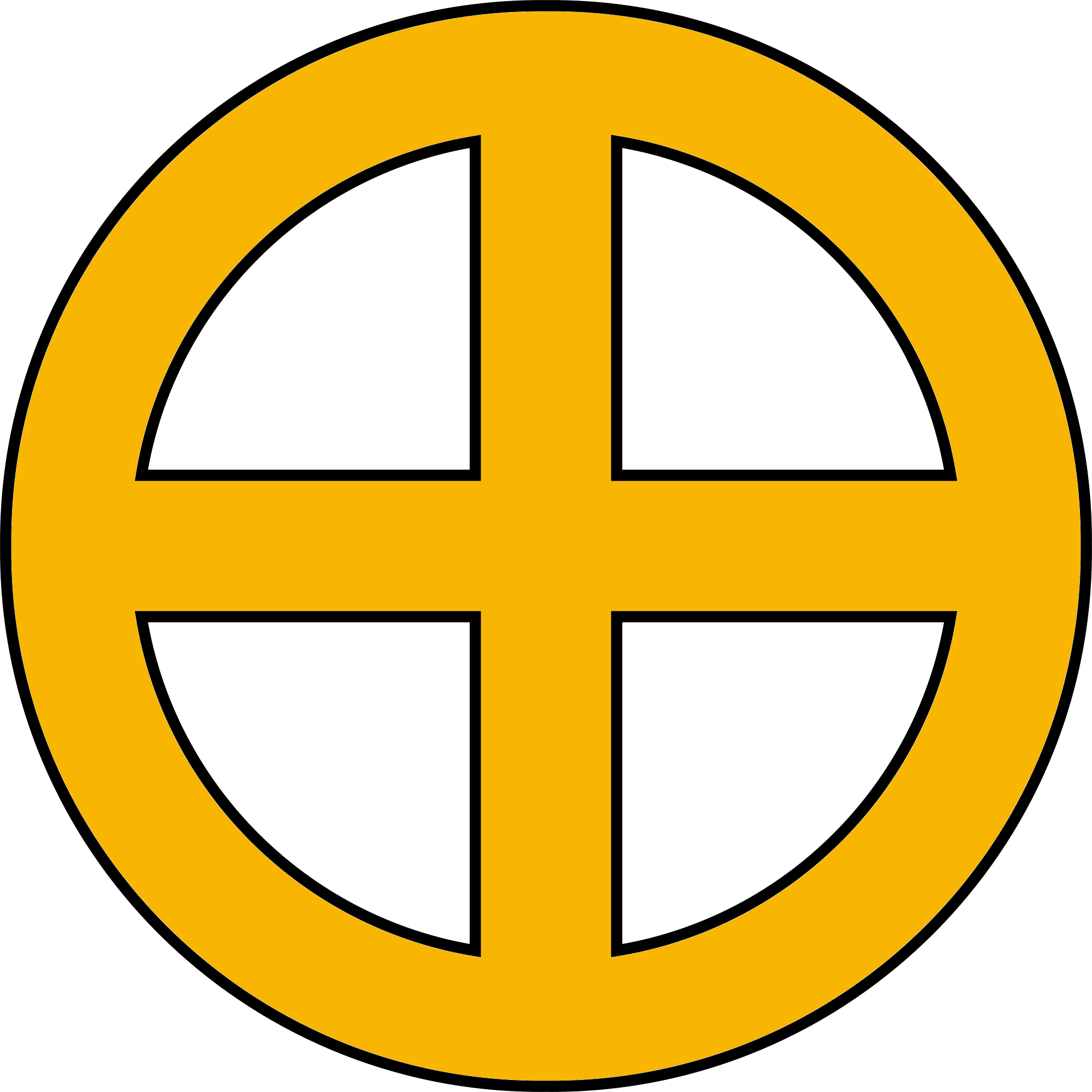
As obvious from this website, the sun cross ⨁ is one of these symbols.
People used to draw this symbol next to doors and windows during winter solstice. It is not certain if it was meant to represent the Sun in Finland, but it certainly was in neighbouring Estonia.
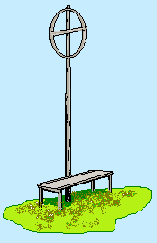
According to reports from the 17th century, some pagan Finnish altars called ristikanta consisted of a stone altar in the front and a pole with a sun cross on the top in the back.
A 13th century gravestone with the symbol has been found. As there was another cross-like image featured, it is possible these were early Christian graves. The gravestones had been reutilized as stepping stones, which was sometimes done as a sign of disrespect towards pagans in Sweden, but in the Finnish context this would be strange because, as stated, there was another cross featured as well.
The pentagram, viisikanta, is a very common protection and magic symbol. Can't say for other regions, but at least in Kainuu it was the most common.
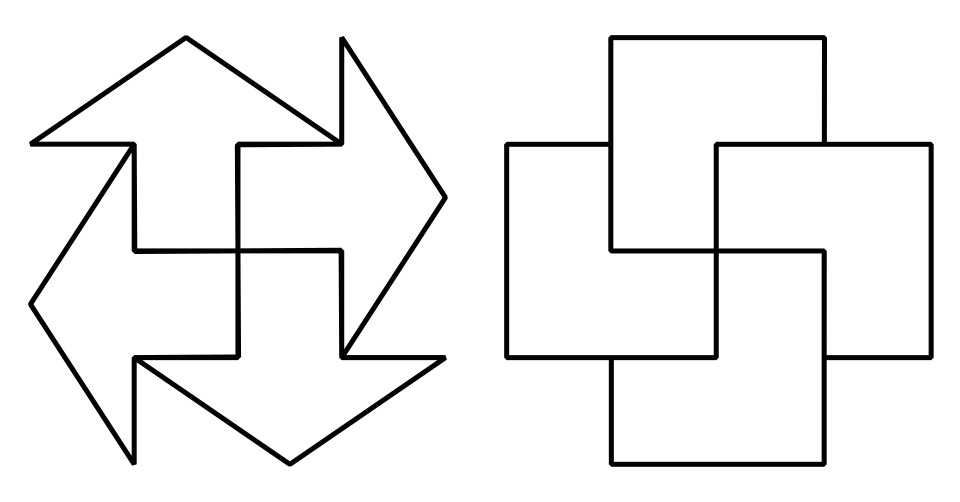
Tursaansydän is the Finnish, more complicated version of the swastika. It has been a symbol for protection, good luck, and decoration.
The name of the symbol, "heart of Tursas", is likely its most interesting feature. It has also been called mursunsydän "heart of a walrus", though the word could also refer to any kind of aquatic animal. In this sense, the words tursas and mursu have been used as synonyms. Regardless of this water connection, the origin of the word tursas seems to actually be the Proto-Germanic *thurisaz, "giant". Runosongs indeed speak of giants called tursas and turilas... and one of them is specifically called a sea tursas as well! With waves, he impregnated Louhi, the death goddess, who then proceeded to give birth to the diseases of the world.
In addition to this, Mikael Agricola called Turisas a Finnish god of war in 1551. Difficult to understand as this is, since no "god of war" is referenced anywhere else, if this is meant to refer to some giant, I think it's none other than the father of Väinämöinen who was born as warrior, the eternal giant (Iku-Turilas) Kaleva. A wrench on this theory would be, as Agricola also knew the name Kaleva, why did he not use it.
The Finnish author Ilmari Kianto used the symbol as his personal logo after he found it carved onto his childhood home's granary's door in Suomussalmi, Kainuu. Despite the swastika, it's been allowed to exist as a Nazi-free symbol in multiple contexts. Unfortunately, the neo-Nazi organization Kohti vapautta! started using it (the non-arrow version), tilted on its axis, in their flag in 2019.

The käpälikkö ⌘ has been used as a protective symbol on walls, as well as a decorative symbol on items and embroidery. In modern Nordic countries, it marks the location of historical and cultural travel attractions, and it was also used in Finnish pennies before the adoption of the euro.
The variant of käpälikkö often called a witch's knot has also been carved on wooden objects.
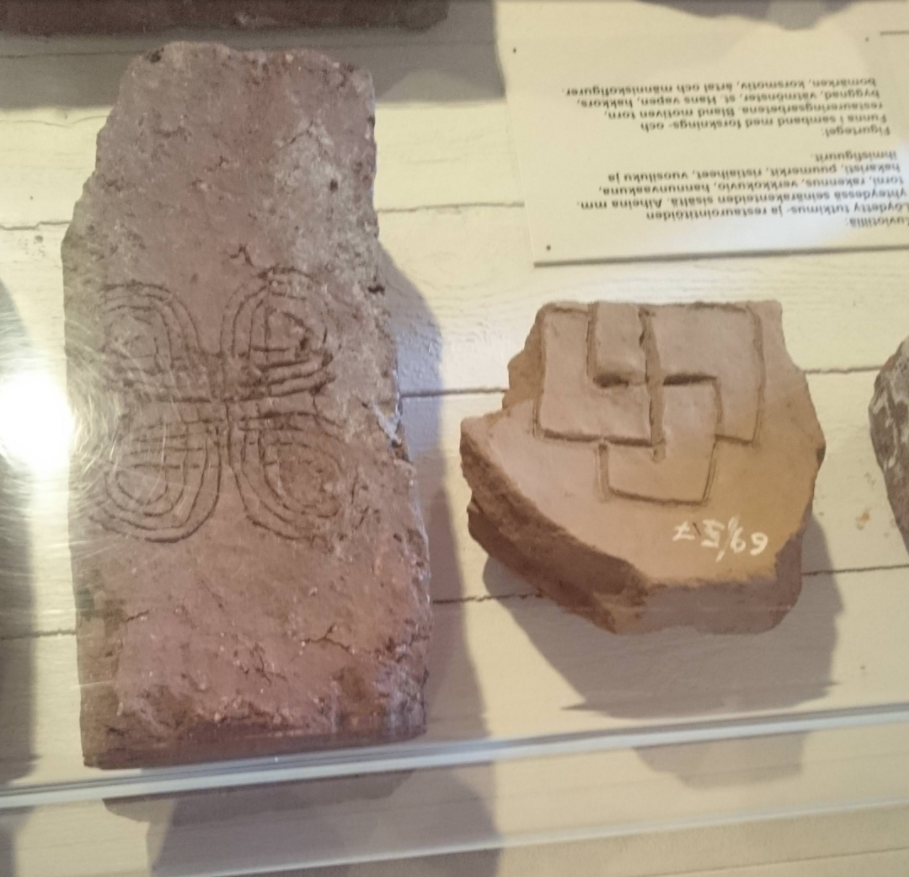
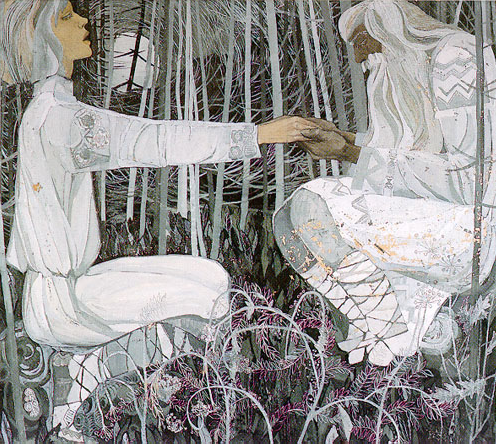
Runonlaulajan kädet, "hands of a runosinger", is a modern era symbol intended to represent the position two runosingers have when singing together, facing each other and holding hands. It has been used as a symbol in many runosinging-related contexts as a decoration or logo. It was also on Finnish pennies before the adaption of the euro. And unfortunately, since Nazis like stealing symbols, an openly racist and fascist party Blue-and-Black Movement started using it in their logo in 2021. If it makes you feel any better, this party only got ~2k votes in the entire country in the last parliamentary election.

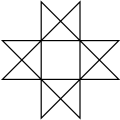
The octagram is a symbol used in wallcloths and other handicrafts in Finland. Because it is common among many other Finno-Ugric groups, such as Estonians, Karelians, Erzyas, Mokshas and Udmurts, it also often appears in contexts that show Finno-Ugric unity. One meaning for the symbol is the Sun, though the Finnish name translates to "shaman drum's wheel".