


Ever since the Proto-Uralic time, there has been a belief of soul dualism among Uralic peoples, and this is also reflected in Finnish faith. Humans have two souls, one tied to the body and keeping it alive, while the other is able to leave the body. In addition to these, the personal haltija spirit of each person is nowadays also referred to as a "third soul", so I will cover it here as well. The modern Finnish word for "soul", sielu, is a later Germanic loan.
In Proto-Uralic, the "body soul", the soul which keeps the body alive, was called *wajŋi. This is not the case with Finnish: in Finnish, this word developed into vaimo "wife" (initially also just "woman"). In Finnish this body soul in question is usually called henki "spirit, breath". It is also possible that the word löyly "sauna steam" originally meant the body soul, as equivalents of this term are used for it in multiple related languages from Sámi to Hungarian. In Komi and Udmurt, these words for the soul are also connected to the "spirit tree" or the alder, which in Finnish is connected to blood (the alder turns red when cut).
The function of the body soul is quite simple: it's a lifeforce that keeps the body alive. When the body dies, stops breathing, the body soul is gone. Blood is, of course, connected to the ability to stay alive and breathing.
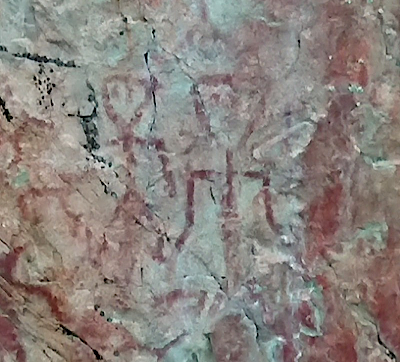
The "free soul" represents consciousness and personality. It leaves the body when one is sleeping; this is why you should not try to wake someone up too quickly, or this soul might not be able to return to the body. Losing this soul causes unconsciousness and eventually, death, which is why a shaman might want to look for someone's lost free soul for them to be able to wake up from a coma, for instance. Naturally, it is the free soul that leaves a shaman's body when travelling to the Underworld. The free soul also remains around as a ghost if the body had died "too early, before the set time" until its time is through. A person's name is also deeply connected to this soul.
In Proto-Uralic, this soul was called *eśi, *iśi or *ićći, and this is true for Finnish as well, where it's called itse (dialectical forms include ite, itte, ihte, isse). Dialectical ihetön "itse-less" means unconscious, and Ostrobothnian belief states that an unbaptized murdered child (typically illegitimate) is an ihtiriekko "itse willow grouse", or a soul bird (note also the origin of the name of this bird in question, riekkua "to rampage").
A haltija (pl. haltijat) is a protecting spirit or deity of a place or thing. Some haltijat have large domains, being gods (for example, the "haltija of water" is the same as the "god of water"), while others are ruler spirits over much smaller things, such as a single pond. Similarly, each human has their own haltija which protects their wellbeing and health, and losing it results in illness, poverty, and loss of luck. This haltija is often called hahmo "figure", haamu or aave "ghost", emuu "mother", or onni or lykky "luck".
While the free soul can't leave the body without unconsciousness, the haltija soul can. It could appear as a ghost-like double, or a permonition you see arrive before the person in question actually does, in which case it is also known as an etiäinen.
Sometimes, you might see this soul being called luonto "nature" and haltija as well. When a tietäjä wants to make their magic stronger, they could perform an incantation to "lift their luonto or haltija" from the Underworld or underground, thus increasing their väki (supernatural power).