


| Names: | Hongas   
Hongatar  
Hongatari
Hongotar
Höngäs
Petäjätär /
Tapiatar
Tapiotar |
|---|---|
| Domain: | Bears |
I've been struggling to explain who Hongatar exactly is.
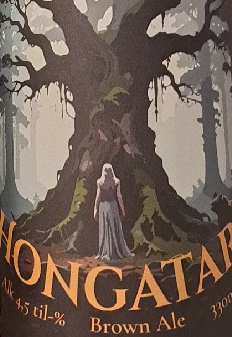
Well, she is the mother of the bear. Sometimes she's called the Lady of the Forest like Mielikki, and sometimes the Lady of Pohjola like Louhi. Some North Karelian runosongs equate her with Louhi (and also call Louhi a daughter of Tapio). On the other hand, it is unclear if other goddess names referring to trees are separate beings or alternate names for Hongatar. If latter, she could also be the same as a daughter of Louhi. Some runosongs confuse Tapiola and Pohjola with each other, but an Underworld goddess has been said to have been involved with the creation of the bear. Finally, it is also possible that Hongatar is completely separate, her own entity, a Lady of the northern Forest, Romentola.
As expected of a bear deity, she is asked to hold bears from attacking people and livestock. She is especially connected to trees as she is asked to put a rowan muzzle on the bear. A Kainuian runosong states that the bear's father is Hongatar, mother is Ryöhkötär, and then mentions Tuometar as well, and it's impossible to say for certain if these are supposed to be three different beings or just different names for one and the same. Another one calls Hongatar the father and Tuonetar the mother (could then mean Louhi's daughter). A North Finnish runosong lists the lullers of the pine as Hongatar, Lemmätär, Kanga(ha)tar and Tuuletar, the last three which in my opinion refer to separate Underworld goddesses (but this is just my interpretation!) The bear's home is called Petäjättären pesä, Hongattaren huone "the nest of Petäjätär, the room of Hongatar".
If Hongatar is the same as these other tree deity names (possibly or possibly not counting Tuometar), she'd also have the names Katajatar "Lady Juniper"  , Pihlajatar "Lady Rowan", and Ryöhkötär "Lady Ruffle?" .
If a bear has been hunted, a ritual funeral called peijaiset was held, sometimes staged as a wedding. Hongatar was invited to this ritual where people would ask her to not be angry with them as they are treating the bear "quest" well and offering gold and silver to Hongatar as compensation. The hunted bear's skull was put on a pine. Hongatar could be imagined as the original mother of the bear whose skull would've been the first there. The bear came down from the heavens and this way, its soul could rise back to be born again. Well, this is the original concept. Some more Christianized runosongs describe someone throwing wool into water, which is gathered and the bear created. According to a Savonian runosong, the bear got its teeth from a silver pine tree, while in a Kainuian runosong, a tooth fell from the heavens which Kavet attached to the gums of the bear while looking for teeth for it in the trees.
An ancient North Eurasian belief also existed in Finland that bears are related to humans.
I hope I can figure out more about here later and add here.
| Hongatar, variants | From honka "an old, large, straight trunk pine tree. |
|---|---|
| Petäjätär | From petäjä "a large pine. |
Only in Finnish, sorry. This is the source material.